


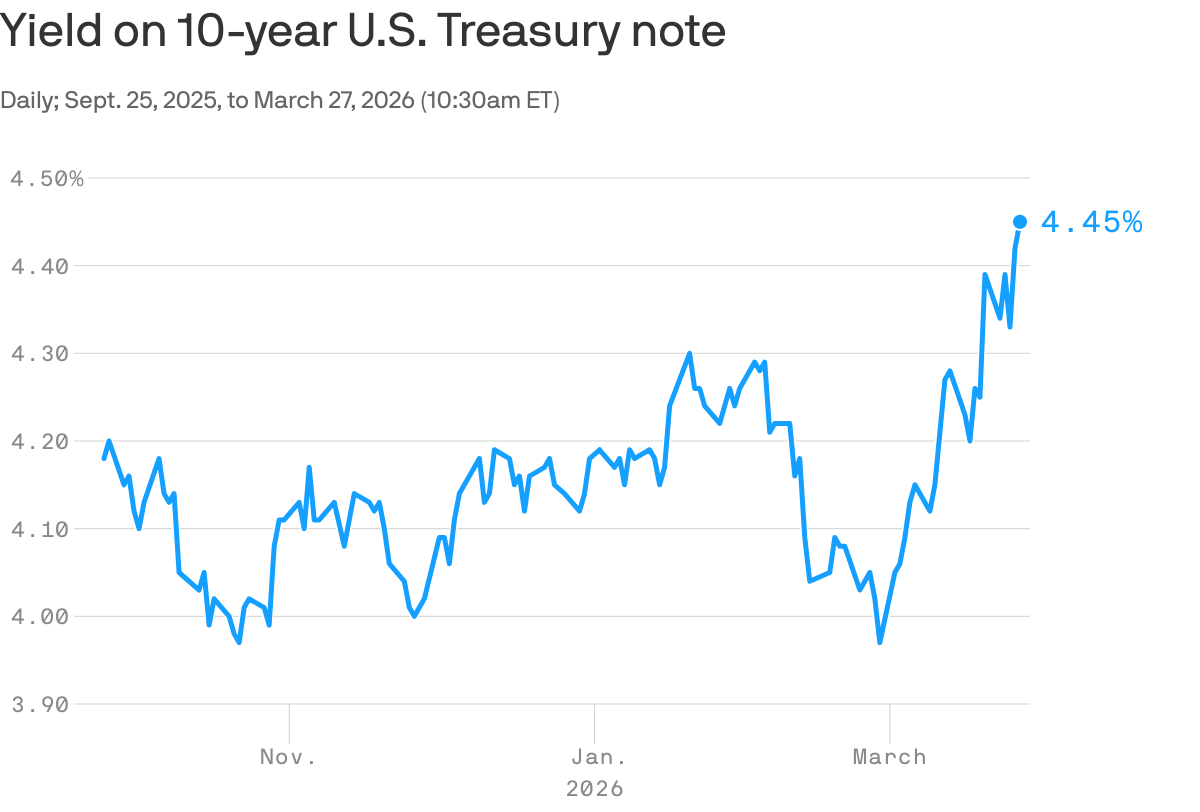
The U.S.-Iran conflict has triggered a sharp rise in longer-term borrowing costs, defying the typical “safe haven” flow into Treasuries during geopolitical crises. The 10-year Treasury yield surged half a percentage point to around 4.45% following the attacks, while the average 30-year mortgage rate jumped from 5.99% to 6.62%. Only about 20% of this yield increase is explained by higher inflation expectations; the majority stems from a rising “term premium,” reflecting investor concerns over increased market volatility, anticipated更高 federal borrowing to fund the war, and profound uncertainty about the fiscal outlook. This shift was underscored by weak demand in recent Treasury auctions.
Consequently, traders are now pricing in a significant chance of Federal Reserve rate hikes instead of the previously expected cuts, despite Fed officials maintaining that current policy is appropriate given elevated uncertainty. The higher rates exert new pressure on the faltering housing market, worsen U.S. fiscal challenges by increasing government debt servicing costs, and threaten to dampen business investment and consumer spending. The situation points to a broader repricing of U.S. debt risk, driven by war-related disruption, future borrowing needs, and doubts about fiscal sustainability, rather than just inflation alone.
Source link